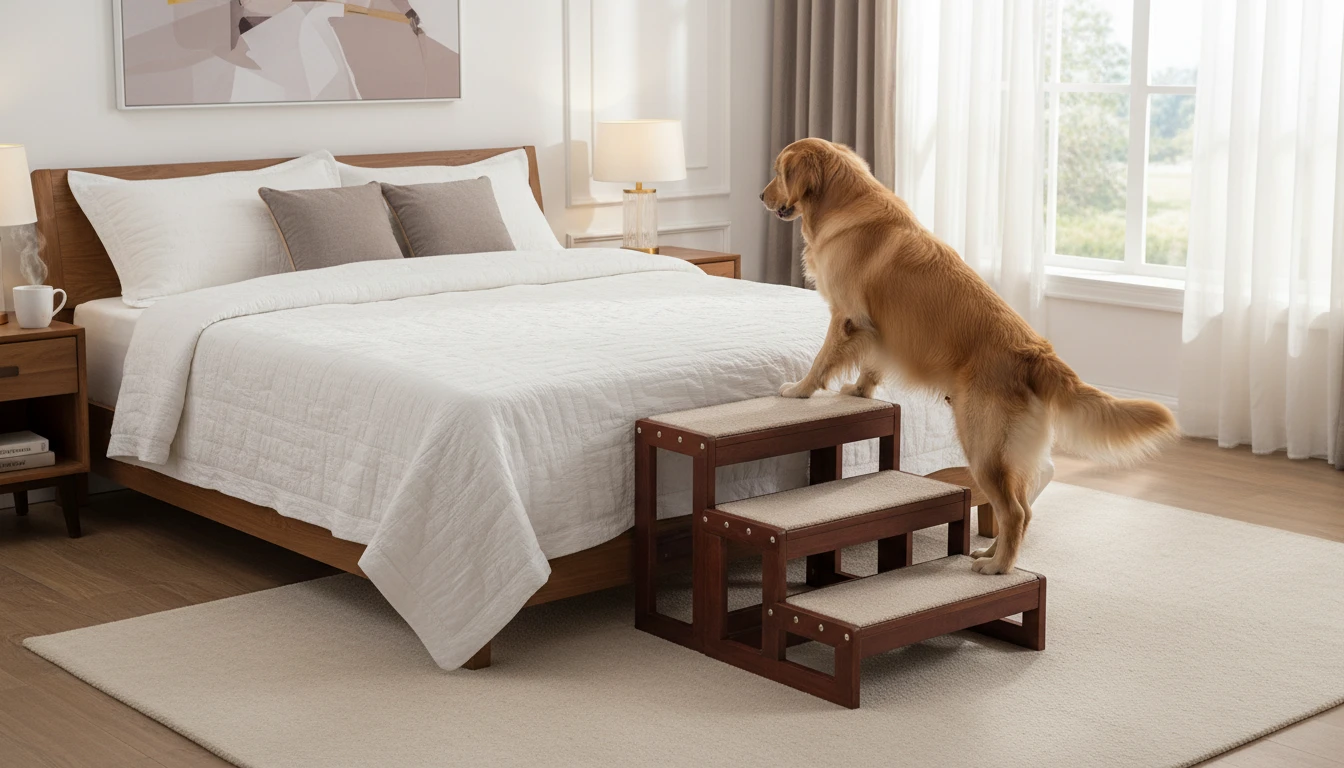
Helping large dogs get on and off the bed safely can seriously make daily routines easier, especially if your pup is older or has joint issues. Foldable bed stairs are designed to offer a sturdy, easy solution for pups that need a little boost but also for owners short on space. If you’re wondering if this kind of product is right for your dog, you’re not alone. I’ll walk you through everything you should know about foldable bed stairs for large dogs—how they work, features to look for, common concerns, and even a handful of tips to help your dog use their new stairs confidently.
Why Foldable Bed Stairs Are Useful for Large Dogs
Big dogs can have trouble with beds and couches as they get older, develop arthritis, or recover from injuries. I’ve had a senior Labrador who, despite his size, struggled to jump up onto my queen bed, even when he really wanted to cuddle. Trying to lift a large pup like that can be tough, and asking them to jump up or down puts pressure on their hips and joints. That’s where foldable dog stairs step in. These stairs sit against any bed or sofa and give your dog a safe, steady way to climb up or down, without the risk of straining themselves (or you!).
Choosing a foldable version is especially practical if you have limited space or like keeping things tidy. When not in use, you can tuck them away in a closet or under the bed. That flexibility is hard to beat and makes keeping your home neat much easier.
Main Features to Know About Foldable Dog Stairs
Not all dog stairs are built alike, and for large dogs, size and durability matter quite a bit. So, let’s check out the features I think you’ll really appreciate if you’re shopping for bed stairs for your big pooch:
- Step Height and Depth: Look for steps that are at least 6 inches deep and not too narrow, since wider steps make a big difference for big paws and long legs.
- Sturdy Construction: The frame needs to hold your dog’s weight (make sure to check the listed max weight). Materials like metal, high-density plastic, and reinforced hardwood provide extra peace of mind.
- NonSlip Surfaces: Rubberized or textured surfaces on each step keep your dog from slipping as they go up or down. This is really important for older dogs who might not be as surefooted.
- Foldable Design: Collapsible stairs with secure locking mechanisms make moving and storing them super easy. I love models that fold flat and can slide right under the bed.
- Lightweight but Sturdy: The stairs should be light enough that you can move them without much effort, but sturdy enough not to wobble or tip over when your dog uses them.
Getting Started: Teaching Your Large Dog to Use Bed Stairs
Most dogs need a little encouragement the first time they see bed stairs. Some dogs are naturally curious, while others want nothing to do with this new “strange thing” near their bed. I found positive reinforcement worked best with my pups. Here’s what has helped me:
- Place treats on each step and encourage them to sniff around and explore at their own pace.
- Use a leash if your dog needs a gentle nudge, but don’t force them—patience pays off.
- Praise every step, no matter how small. Some large dogs like to watch you demonstrate by tapping your hand or foot on the steps, or you can even walk a favorite toy up one step at a time.
Avoid rushing the process. For bigger dogs, making sure the stairs feel steady and don’t wobble is key because any movement can make them nervous. If your pup hesitates, try sitting at the top with plenty of treats or their favorite toy and calling them up, making the process rewarding and fun. Offering calm encouragement and giving them time to get comfortable will help build their confidence.
Factors to Consider Before Buying Foldable Bed Stairs for Large Dogs
Picking the right bed stairs for a large dog isn’t just about looks or price. Here are a few practical things I look for whenever I’m recommending stairs to friends or clients:
- Weight Capacity: Always double-check the manufacturer’s suggested max weight. Give yourself a little wiggle room if your dog is close to the limit.
- Total Height: The stairs should reach high enough for your bed or couch, ideally just slightly higher to give a level stepoff for your dog.
- Traction and Grip: I love models with carpeted or ribbed treads, since they provide good grip for paws—even if your dog is coming down in a hurry.
- Easy Cleaning: Dogs shed and track dirt, so pick stairs with removable, washable covers or easy-to-wipe materials.
- Weight of the Stairs: Lightweight models are easier to move around the house but make sure they’re sturdy enough not to scoot if your dog is a little clumsy.
Stability and Wobble
A lot of large dogs hesitate if the stairs move while they’re on them. Look for stairs with a wide base, solid feet, or nonslip bottom pads to prevent sliding on hardwood or tile. Reading reviews or watching demo videos of the stairs in action is pretty handy for getting a feel for their realworld stability.
Materials and Durability
Materials matter more than you might think. Heavyduty plastic and steel frames are best for bigger breeds and can handle more weight without bending or flexing. Wooden stairs offer a classic look and great stability, but they’re usually not as light or portable. It’s worth checking whether any hardware (like hinges or folding mechanisms) is reinforced, especially if your dog is active or tends to jump onto the first step. Also bear in mind that whichever material you choose, keeping those fasteners tight and occasionally checking the parts will keep the stairs serving your dog safely for a long time.
Common Challenges When Using Bed Stairs (And How to Fix Them)
- Reluctant Dogs: Some pups are just stubborn. Keep sessions fun and light, take breaks, and never force them up or down.
- Slippery Steps: If your dog slips even with tread, try adding extra grip tape or stickon carpet runners.
- Noisy Mechanisms: Some foldable stairs squeak or clank. A little silicone spray can often keep things quiet.
- Frequent Cleaning: Stairs pick up hair and dirt fast. Removable covers or an easywipe surface makes cleaning simple. I just toss the covers in the wash every couple of weeks, and they come out looking new.
It’s also smart to make sure the stairs are always in the same spot; moving them around too much can confuse your dog or lead to an unexpected slip, especially at night. And if your pup has vision or mobility issues, pairing the stairs with a nightlight gives a little extra safety when the lights are low.
Tips and Suggestions for Making the Most out of Your Foldable Dog Stairs
I’ve picked up a few tricks after helping several large dogs adapt to stairs:
- DoubleCheck Placement: Make sure the stairs are pressed snug against the bed at all times. A small gap can cause a misstep, especially if your dog’s in a hurry to greet you in the morning!
- Monitor for Wear: Watch for any sagging, loose steps, or worn out grip and replace or repair if you spot any trouble. It keeps things safe for everyone.
- Rotate Use: If you also have a couch or like to move beds around, choose lightweight stairs so you can move them from room to room as needed.
- Respect Your Dog’s Limits: Sometimes arthritis or hip issues get worse and your dog just can’t use stairs easily anymore. In those cases, check with your vet for ramps or other mobility aids.
For even more peace of mind, making a habit of checking the stairs for damage every week means you can fix small issues before they turn into problems. Even the best set can wear over time if your big dog uses them daily, so staying on top of maintenance helps extend their life and keeps your buddy safe.
Popular RealWorld Uses
- Senior Dogs: Helping older dogs stay close and sleep in your bed provides comfort and eases separation anxiety.
- Recovering from Surgery: Many dogs coming out of TPLO or other surgeries aren’t supposed to jump, even a few inches. Folding stairs help them follow doctor’s orders without missing out on their favorite cuddle spot.
- Owners with Limited Space: Foldable stairs are perfect for apartments or small homes where you can’t keep a permanent set of steps out all the time.
Frequently Asked Questions
Question: How do I know if my dog actually needs stairs?
Answer: If your dog hesitates, paces, or avoids jumping onto the bed (especially if they used to), stairs can really help. Any sign of joint pain, aging, or post-surgery recovery is another clue.
Question: Can foldable stairs hold up to daily use from a 90pound dog?
Answer: Yes, if you choose a set with a high weight rating and durable materials. Always check real user reviews and look for stairs made for large breeds.
Question: Are ramps better than stairs?
Answer: Both work, but some big dogs prefer stairs if they already know how to use them, while others do better with gradual ramps. Stairs take up less space and are easier to fold away.
Question: How often should I clean the stairs?
Answer: Give them a wipedown every few days, or toss covers in the wash whenever they look dirty. Keeping them clean helps prevent tracking dirt onto your bedding too!
Final Thoughts
Foldable bed stairs for large dogs make everyday life safer and more comfortable for both dogs and owners. The right set can help your best friend stick close at bedtime, ease arthritis stress, and spare your own back from repetitive lifting. A little patience introducing the stairs pays off with happier, more independent pups and tidier, more organized spaces. Taking the time to set up your stairs well and keep them in top shape makes a world of difference for big dogs and their families, so you both can kick back and relax together with confidence.